
Yield: 4 servings
Prep time: 15 minutes
Cook time: 12 to 18 minutes
Total time: 27 to 33 minutes
Why I make it this way
I call this technique simplicity in parchment. I love cooking a meal that lets everyone have a say in dinner. I used a ramp and citrus, but make this technique a changing palate of flavors. Put out a few herbs, sliced vegetables, and citrus, and let each person choose what goes with their fish before you seal the packets. Inside, the fish gently steams with those flavors. Opening your own packet feels like a small occasion, even on an ordinary night. Oh, did I mention? Cleanup is in the bag.
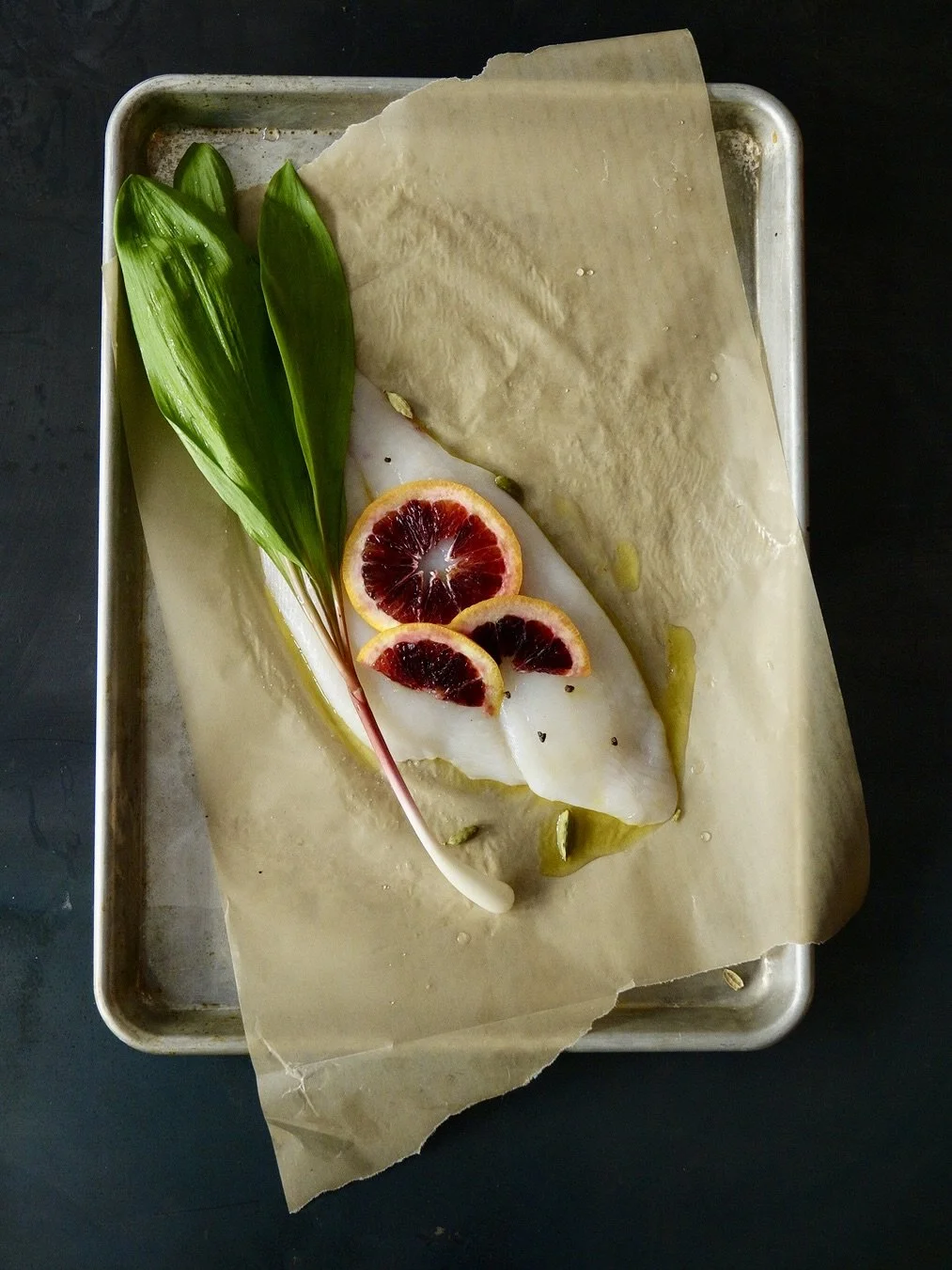
Tender fish baked in parchment. A simple, flexible weeknight dinner with easy cleanup.
INGREDIENTS
4 fish fillets, about 5 to 6 ounces each, such as fluke, snapper, halibut, or salmon
1 orange, thinly sliced, plus a little juice
8 ramps, divided into two for each packet
1 tablespoon extra virgin olive oil
Kosher salt and freshly ground black pepper
4 sheets of parchment paper, approximately 15 by 18 inches each
DIRECTIONS
Heat the oven to 400°F. Set a large baking sheet nearby.
Fold each parchment sheet in half, then open it. Place a fish fillet on one side of each crease, leaving enough room around it to seal the packet. Season the fish with salt and pepper. Divide the ramps, orange slices, and olive oil among the fillets. Add a small squeeze of orange juice to each.
Fold the empty half of each sheet over the fish. Starting at one end, make a series of small overlapping folds around the open edges, pressing firmly as you go. Tuck the final fold underneath to keep the steam inside. Arrange the packets on the baking sheet.
Bake for 12 to 18 minutes, depending on the fish's thickness. Carefully open one packet away from your face to release the steam. Check the thickest part of the fish with a thermometer for 145°F. Return the packet to the oven if it needs more time.
Place each packet on a plate and let everyone open their own, or transfer the fish and its juices to plates.
COOK BY FEEL
Leave room for each packet to close without pressing the paper tightly against the fish. Thin fillets will finish before thick ones, so check one early. Cutting vegetables too thick: Because fish cooks quickly, hard vegetables like carrots, potatoes, or fennel must be shaved paper-thin (using a mandoline) or quickly sautéed beforehand so they aren't raw when the fish is done.
Loose seals: If steam leaks out of the edges, the packet won't puff up, and the fish will bake dry instead of steaming tenderly
The juices collected in the parchment belong on the plate.
MAKE IT YOURS
Use blood orange when it is in season, or swap ramps for scallions or allium of preference. Thinly sliced fennel is another good addition. Keep vegetables thin enough to cook in the time the fish needs, and don't fill the packet so full that it will not seal. Serve it with cooled rice, salad greens, or roasted potatoes.
NUTRITIONAL THERAPY NOTE
This method keeps the fish and its seasoning together and lets them cook together. Add potatoes, rice, or bread and a vegetable to suit your appetite.
