
Serves: 2
Prep time: Approximately 10 minutes
Cook time: Approximately 10 minutes
Total time: Approximately 20 minutes
Times are estimates. Prepare the yogurt and oil while the water heats for poaching.
Why I make it this way
What I love about Turkish eggs is the contrast: creamy yogurt, warm eggs, and a fragrant drizzle that brings everything together. Traditional çılbır uses garlicky yogurt and pepper-infused butter. This version goes in another direction, using coconut yogurt, olive oil, and ginger for warmth. Turmeric adds color and earthiness, while lemon keeps the richness lively. It is a useful reminder that changing an ingredient can give you options if dairy isn’t well tolerated.
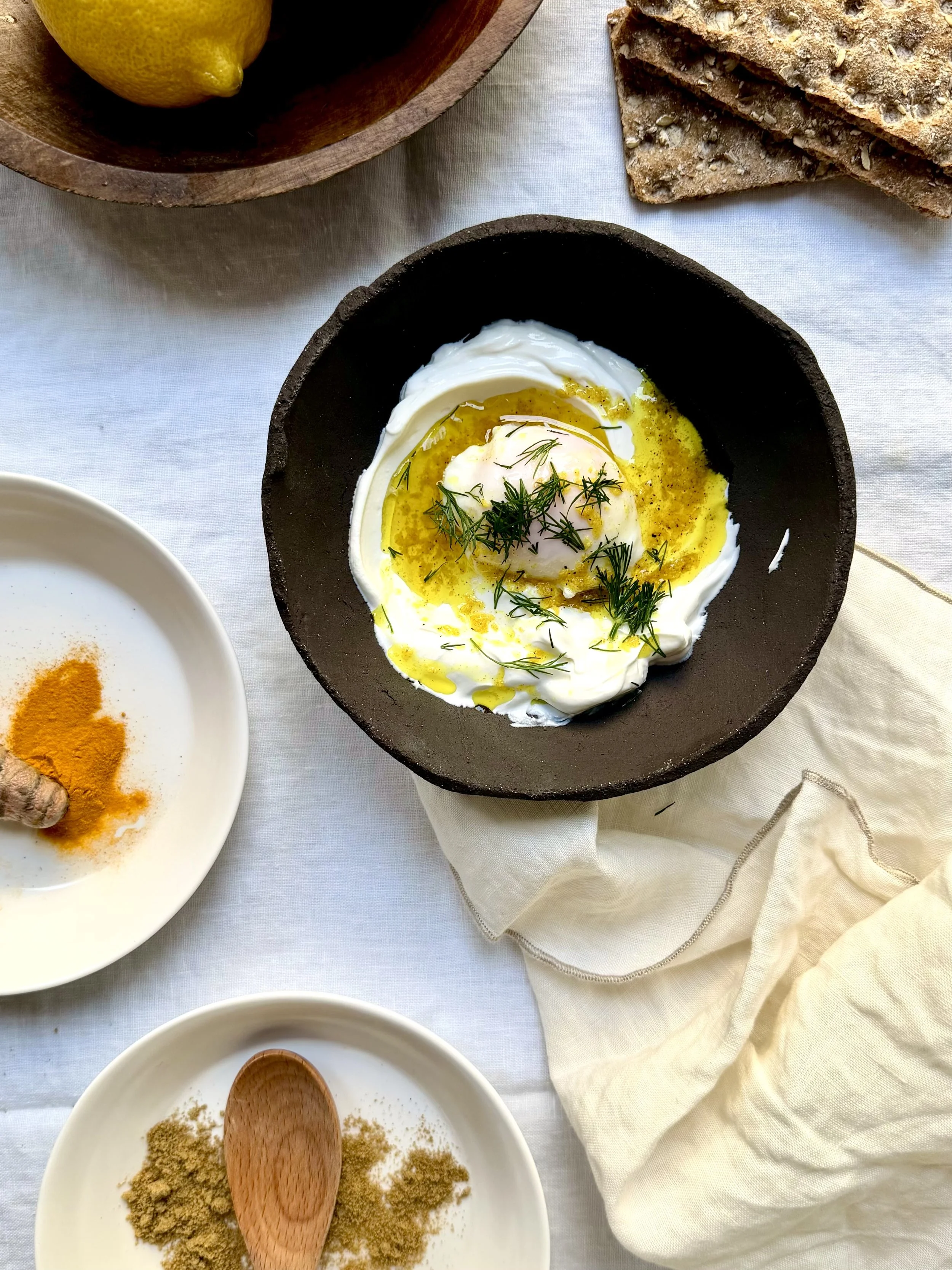
Poached eggs over a savory coconut-yogurt base, finished with warm ginger, turmeric, lemon, and fresh herbs.
INGREDIENTS
For the coconut-yogurt base
1 cup thick, plain, unsweetened coconut yogurt
1 small garlic clove, finely grated, optional
1 teaspoon fresh lemon juice
1 tablespoon extra virgin olive oil
¼ teaspoon fine sea salt, plus more to taste
2 tablespoons finely chopped fresh dill or mint
For the eggs
4 large eggs; use pasteurized shell eggs if serving with soft yolks
1 tablespoon apple cider vinegar, optional, for the poaching water
For the ginger-turmeric-lemon oil
3 tablespoons extra virgin olive oil
1 teaspoon finely grated fresh ginger
½ teaspoon ground turmeric
½ teaspoon finely grated lemon zest
1 tablespoon fresh lemon juice
1 tablespoon finely chopped chives
or green onion tops, optionalA pinch of fine sea salt
Optional finish: extra dill or mint, microgreens, cucumber ribbons to serve alongside
DIRECTIONS
1. Prepare the yogurt base. Stir the coconut yogurt, optional garlic, lemon juice, olive oil and salt together. Fold in the dill or mint.
Taste before adding more salt or lemon. If the yogurt is too thick to spread easily, loosen it with 1–2 teaspoons of water.
Divide between two shallow bowls. Set aside while you finish the eggs and oil so the base is not refrigerator-cold when served.
2. Heat the poaching water. Fill a wide saucepan with approximately 3 inches of water. Bring to a boil, then lower the heat until the water is barely simmering. Add the vinegar if using.
3. Make the aromatic oil. Warm the olive oil in a small pan over low heat.
Add the ginger and turmeric. Stir for approximately 30–45 seconds, until fragrant. Keep the heat gentle; the ginger should not brown.
Remove from the heat and let the sizzling settle. Carefully stir in the lemon zest, lemon juice, salt, and optional chives. Set aside.
4. Poach the eggs. Crack an egg into a fine-mesh sieve over a bowl. Let the thin, watery white drain briefly, keeping the thicker white and yolk. Transfer to a small cup.
Lower the cup close to the water and gently slide the egg in. Repeat with a second egg, leaving space between them. Keep the water still to avoid a whirlpool.
For pasteurized eggs with soft yolks, begin checking after 3–4 minutes. The whites should be fully set. For unpasteurized eggs, continue cooking until both whites and yolks are firm.
Lift out with a slotted spoon and drain briefly on a clean plate lined with paper towel. Repeat with the remaining eggs.
5. Assemble. Place two eggs over each bowl of coconut yogurt. Stir the aromatic oil again—the lemon juice may separate—and spoon it over the eggs and yogurt.
Finish with herbs or microgreens. Serve immediately, with cucumber ribbons alongside if using.
COOK BY FEEL
Choose a yogurt you enjoy unsweetened. Coconut flavor and tang vary considerably between brands.
Keep the base spreadable. It should support the eggs without feeling stiff or watery.
Warm the spices gently. Use fragrance as your cue; darkening ginger or smoking oil means the heat is too high.
Keep the poaching water calm. Small bubbles are enough. Vigorous boiling can break up the whites.
Drain before plating. Excess poaching water will dilute the yogurt and aromatic oil.
MAKE IT YOURS
Use plain strained dairy yogurt if you tolerate dairy and prefer its flavor. The ginger-turmeric oil works with either base.
Omit the raw garlic if it does not agree with you. Reduce or omit the lemon juice according to your tolerance, using a little zest for aroma if suitable. Vinegar is not automatically a gentler substitute.
Serve with toast, cassava flatbread or roasted sweet potato rounds. Check packaged accompaniments against any dietary restrictions you follow.
For readers following AIP: use this egg-based recipe only after you've successfully reintroduced whole eggs, with the other ingredients suited to your individual plan. It is not an elimination-phase recipe.
NUTRITIONAL THERAPY NOTE
The eggs provide most of the protein in this meal. Coconut yogurt supplies the creamy base, but its protein, calcium, and other nutrients depend on the product; check the label rather than assuming it matches dairy yogurt.
Ginger and turmeric add flavor. This recipe does not need a digestive or anti-inflammatory promise to earn its place at breakfast.
