
Serves: 6
Prep: 15 minutes
Bake: 40–45 minutes
Rest: 15 minutes
Why I make it this way
A clafoutis (klah-foo-tee)is fruit baked in a thin, custardy batter. For this plum version, you need eggs, milk, flour, sugar, vanilla, a little butter, and ripe plums. It takes about ten minutes to assemble, then about forty minutes in the oven. The edges turn golden, the plums soften, and the kitchen smells like warm fruit and vanilla.
Plums bring enough tartness to keep a simple custard interesting. The thin batter settles around them and browns at the edges. No pastry to make, and the same method gives you a starting point for other seasonal fruit.
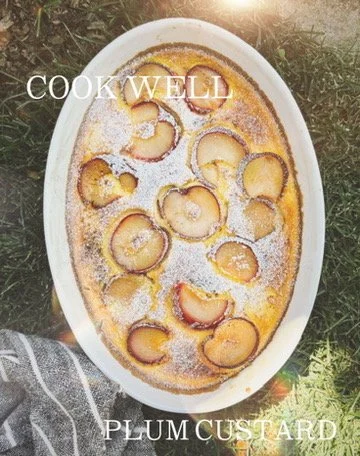
Ripe plums bake in a thin vanilla custard batter until the edges are golden and the center is softly set. A simple clafoutis-style dessert for late summer and autumn
INGREDIENTS
4 medium ripe but firm plums, pitted and cut into thick slices
Butter for the baking dish
3 large eggs
1 cup whole milk
½ cup all-purpose flour
⅓ cup sugar
1 tablespoon melted butter, cooled slightly
1 teaspoon vanilla extract
Finely grated zest of ½ lemon
¼ teaspoon fine salt
Confectioners’ sugar, optional, to finish
DIRECTIONS
Heat the oven to 350°F. Butter a shallow 9-inch baking dish.
Arrange the plum slices across the dish. Keep them mostly in one layer.
Whisk the eggs and sugar together. Whisk in the milk, melted butter, vanilla, lemon zest, and salt. Add the flour and whisk until the batter is smooth enough to pour; a few tiny lumps are fine.
Pour the batter around and over the plums. Leave some fruit visible on top.
Bake for 40–45 minutes, until the edges are browned and puffed and the center is set with only a slight tremble. If the center still looks liquid, give it a few more minutes.
Rest for 15 minutes. Dust lightly with confectioners’ sugar if you like. Serve warm or at room temperature.
COOK BY FEEL
Look for the edges to puff and turn golden while the center settles into a soft custard. A slight wobble is fine when it comes out of the oven; a liquid center needs more time.
Use plums that are ripe but still firm enough to slice cleanly. Very soft fruit can release more juice and make the center take longer to set.
Let the custard rest before serving. The texture continues to settle as it cools, and the fruit juices have a little time to redistribute.
MAKE IT YOURS
Use nectarines, apricots, cherries, or berries in place of the plums, adjusting the amount according to the size and juiciness of the fruit.
Add a pinch of cinnamon or cardamom to the batter, or replace the lemon zest with orange zest.
For a little more texture, scatter sliced almonds over the top before baking.
Serve warm, at room temperature, or chilled the next day. A spoonful of plain yogurt alongside works especially well if you want something tangy against the custard.
This feels very consistent with how she writes the others: sensory, practical, not preachy, and accurate. I’d avoid claiming anything more specific nutritionally than that.
NUTRITIONAL THERAPY NOTE
Eggs and milk bring protein to the custard, while the plums contribute fruit, fiber, and natural tartness. This is still a dessert, and it does not need to be made into something else to have a place at the table.
If you serve it with yogurt or a handful of nuts, you can make the plate a little more substantial, but that is entirely optional.
Technique learned: Here’s the technique I want you to notice. In Martha Stewart’s nectarine clafoutis, she briefly bakes a thin layer of batter on the bottom of the dish before adding the rest and arranging the fruit. I found that little pause interesting: it gives the fruit a better chance to stay visible on top. With my plums, I like to save a few particularly beautiful slices for the surface. You can add fresh fruit when serving, too.
It’s a dessert for tonight, with any luck, a slice left for breakfast. More than that, it’s a batter you can learn once and bring back when the fruit changes.
