
Serves: 4 as a vegetable course or warm salad
Prep Time: 15 minutes
Cook Time: 30 minutes
Total Time: 45 minutes
Why I make it this way
Beets are usually roasted whole, boiled, or added to a salad after the main cooking is done. If you don’t like the texture of beets, this may be your antidote. Here, they get a little more attention. A reverse sear is usually associated with meat, but the principle works beautifully with sturdy vegetables. Cook gently first. Sear aggressively second. The fennel brings sweetness, orange brings brightness, and pistachios add crunch. The reverse sear is what makes this recipe worth knowing because once you understand the technique, you can use it on far more than beets.
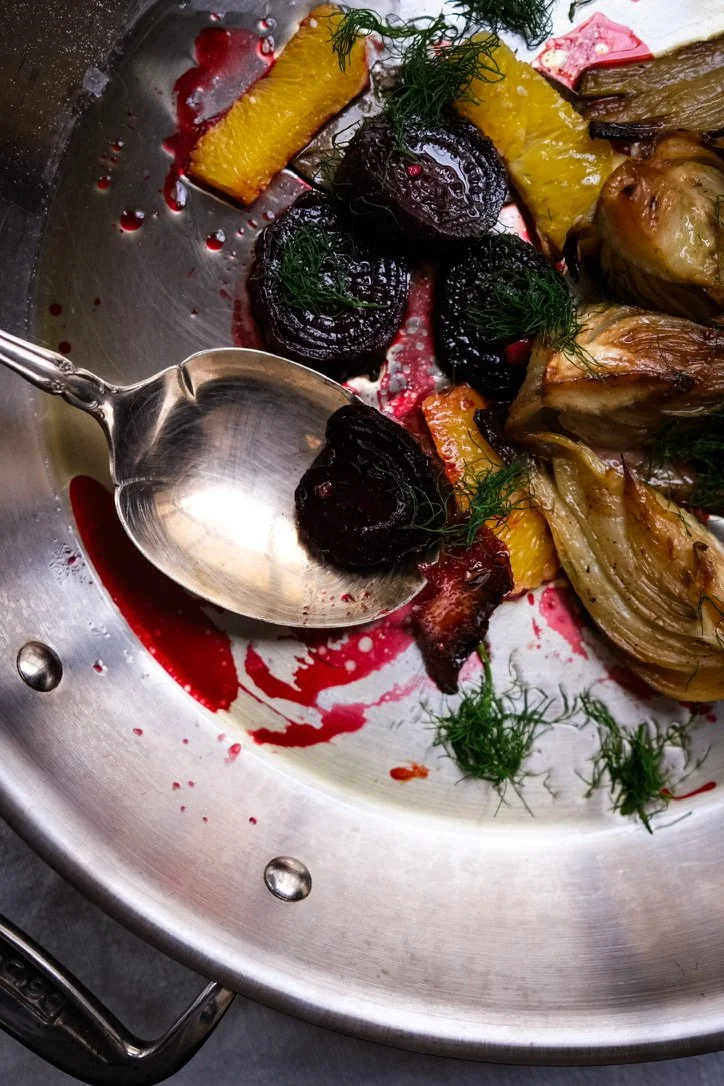
Tender beets are reverse-seared until deeply caramelized, then paired with roasted radicchio, orange, pistachios, and a bright citrus glaze.
INGREDIENTS
For the beets
4 medium beets, about 1½ to 1¾ pounds total, scrubbed
½ to 1 cup water, as needed
3 tablespoons extra virgin olive oil
2 wide strips of orange peel, removed with a vegetable peeler with as little white pith as possible
2 bay leaves
For the fennel
1 large fennel, quartered lengthwise
2 tablespoons extra virgin olive oil
½ teaspoon kosher salt
To finish
⅓ cup shelled pistachios, lightly toasted and roughly chopped
½ cup peppery microgreens, baby arugula, or fennel fronds
For the citrus glaze
3 tablespoons honey
⅓ cup fresh orange juice
1½ tablespoons fresh lemon juice
¾ teaspoon kosher salt, or to taste
¼ to ½ teaspoon red pepper flakes
1 cup fresh orange segments, preferably supremes
DIRECTIONS
1. Roast the fennel
Heat the oven to 425°F / 220°C.
Brush the fennel quarters with olive oil and season with salt. Arrange cut-side down on a parchment-lined sheet pan.
Roast for 15 to 18 minutes, turning once, until the cut edges are deeply browned and the centers have softened but still hold their shape.
2. Gently cook the beets
While the radicchio roasts, slice the beets into roughly ½- to ¾-inch medallions. Try to keep the thickness consistent so they cook evenly.
Arrange the beets in a wide skillet in a single layer. Add ½ cup water, cover, and bring to a gentle simmer over medium heat.
Cook until the beets are nearly tender but still offer a little resistance when pierced with the tip of a knife, adding a splash more water if the pan becomes dry.
Remove the lid and allow the remaining water to evaporate completely.
This is the important part: the pan and the surface of the beets need to be dry before you sear them.
3. Reverse-sear
Add the olive oil, orange peel, and bay leaves to the dry skillet.
Increase the heat to medium-high. Let the beets cook undisturbed for 3 to 4 minutes, until one side develops a dark caramelized edge.
Turn and sear the second side for another 2 to 3 minutes.
4. Glaze
Reduce the heat to medium-low.
Add the honey, orange juice, lemon juice, salt, and red pepper flakes. Gently move the beets through the liquid as it bubbles and reduces into a glossy citrus glaze, about 3 to 5 minutes.
Fold in the fresh orange segments just long enough to warm them.
Discard the bay leaves and orange peel.
5. Finish
Arrange the roasted radicchio on a platter. Spoon the warm beet medallions and citrus glaze over and around it.
Finish with toasted pistachios and the microgreens or baby arugula.
TECHNIQUES LEARNED
THE REVERSE SEAR
This is the technique worth remembering.
A reverse sear is usually associated with meat, but the principle works beautifully with sturdy vegetables.
Cook gently first. Sear aggressively second.
The first stage cooks the interior without burning the exterior. Once the water evaporates, the second stage adds concentrated dry heat and creates the browning you cannot get from steaming alone.
The order matters.
Once you understand it, you can apply the same idea to carrots, parsnips, turnips, squash, or other dense vegetables.
This is less about mastering one beet recipe and more about adding another useful cooking technique to your kitchen.
USEFUL COMBINATIONS
Serve this alongside roast chicken, salmon, lamb, lentils, or farro.
For lunch the next day, roughly chop the leftover beets and radicchio and add them to greens or grains with a little feta, goat cheese, or labneh.
You can also borrow the technique without making the entire dish: reverse-sear the beets and finish them simply with good olive oil, lemon, salt, and herbs.
NUTRITIONAL THERAPY NOTE
Beets are naturally rich in dietary nitrate, which the body can convert through the nitrate-nitrite-nitric oxide pathway. Nitric oxide plays an important role in vascular function and blood flow.
But this plate's value goes beyond a single compound. You also have bitter greens, citrus, nuts, fiber, unsaturated fats, and several different plant pigments on one plate.
That is the kind of nutritional diversity I am interested in: useful food, cooked well enough that you actually want to eat it again.
