
Yield: Approximately 2–3 cups; use a wide-mouth quart fermentation jar
Prep time: 25 minutes
Cook time: None, unless preparing additional brine
Fermentation time: Approximately 3–4 weeks at 70–75°F
Total time: Approximately 3–4 weeks, plus preparation
Why I make it this way
Riddle me this: a cucumber can become tangy in vinegar or through fermentation. Similar result on the fork; a very different process in the jar. With sauerkraut, naturally occurring bacteria turn the cabbage’s sugars into lactic acid. My part is to measure carefully, keep the cabbage submerged, and give it the right conditions. Time gets an ingredient credit here.
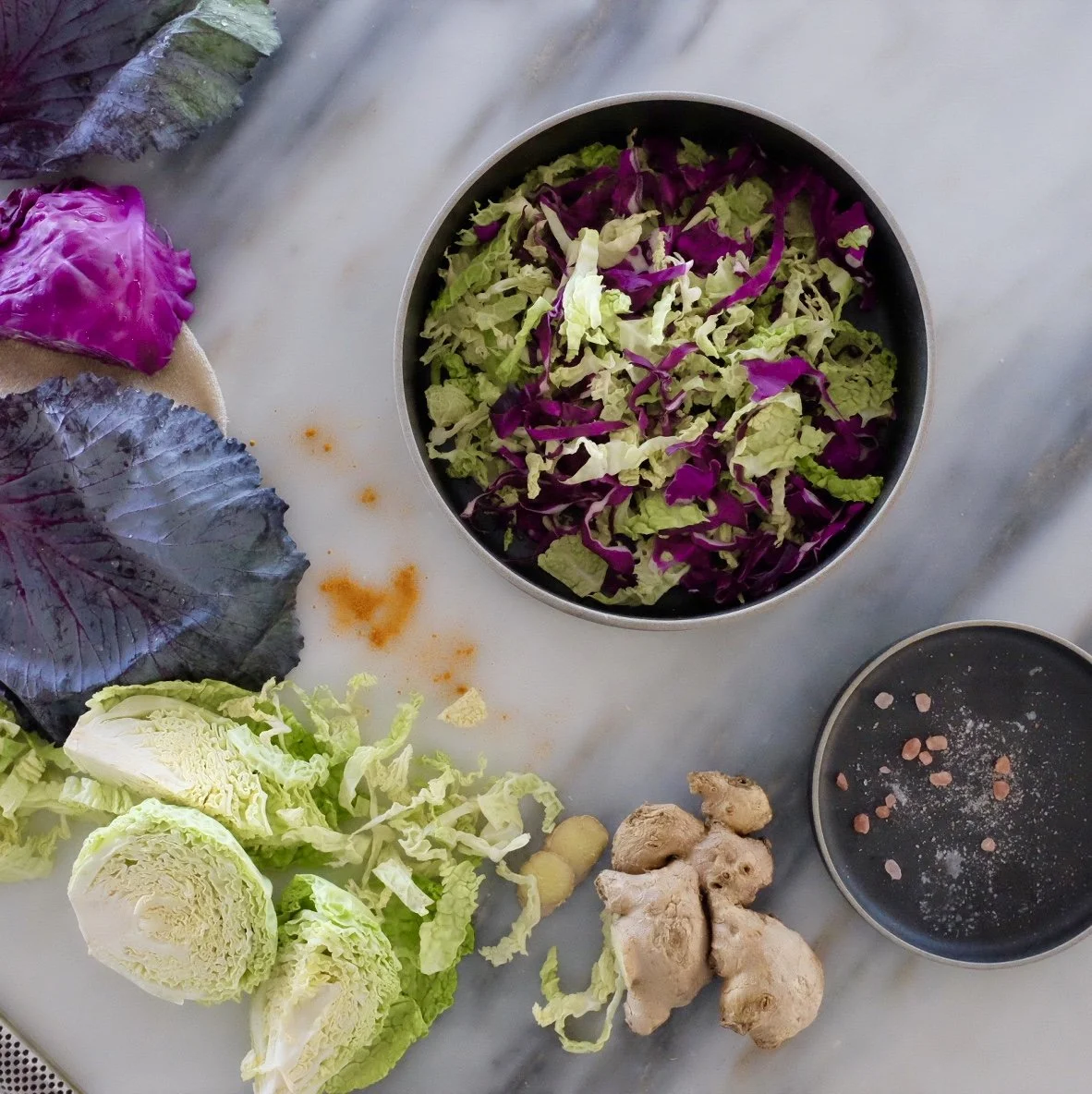
Cabbage and salt, packed beneath their own brine and left to ferment into a tangy, crisp condiment. No vinegar required.
INGREDIENTS
1¼ lb fresh green cabbage, weighed after removing damaged outer leaves and the core
2¼ teaspoons canning or pickling salt; measure level and do not substitute flaky salt by volume
Additional brine, only if needed
1 cup water
1⅛ teaspoons canning or pickling salt
DIRECTIONS
Wash your hands and clean the jar, weight and lid thoroughly. Rinse the cabbage under cool running water, drain and shred finely.
Toss the weighed cabbage thoroughly with the measured salt. Massage with clean hands until it softens and releases liquid.
Pack into the jar a little at a time, pressing firmly to remove air pockets. Pour in all the liquid from the bowl.
Add the fermentation weight. Keep the cabbage beneath 1–2 inches of brine, leaving space above for expansion. If the jar is too full, use a larger fermentation vessel. If more brine is needed, boil the additional water and salt, cool completely, then add just enough to cover.
Fit the airlock lid according to its instructions. Place out of direct sunlight at 70–75°F. Check regularly that the cabbage remains submerged
Allow approximately 1-2 weeks for fermentation. Before tasting, confirm that bubbling has stopped and the pH is 4.6 or below. If bubbling stops while the pH remains above 4.6, continue fermenting and check every 1–2 days again.
Once fermentation is complete, replace the fermentation lid with a regular lid and refrigerate. Keep the cabbage under the brine, and use clean utensils when serving.
COOK BY FEEL
Bubbles and a developing sour aroma are normal. Flavor and texture matter, but they don't replace measured salt, temperature, and acidity checks. Discard the batch if you see fuzzy mold or find a rotten odor or slimy cabbage; do not taste it to investigate.
MAKE IT YOURS
For your first batch, keep the fermentation to cabbage and salt. Add personality when serving: caraway seeds, chopped dill, or a little grated apple stirred into the portion you will eat. Try it alongside eggs, potatoes, beans, or roast chicken.
NUTRITIONAL THERAPY NOTE
Sauerkraut adds cabbage, tang, and variety to a meal. Unheated sauerkraut can contain live microorganisms, but that does not automatically make it a clinically proven probiotic food. If it's unfamiliar, start with a small spoonful and notice how it agrees with your digestion.
