
Serves: 2 as a meal or 4 as a side
Prep: 20 minutes
Cook: 30 minutes
Total: 50 minutes
Why I make it this way
My kids used to tell me their taste buds were more sensitive than mine whenever I put bitter greens on the table. Fair enough. It took a few tries, but now they love a good winter chicory. This is the salad I’d make to win someone over: sunchokes and fennel roasted until their edges brown, cool radicchio, sweet oranges, and a sharp shallot dressing. A handful of toasted nuts and spices gives it the crunch of pangrattato. Every forkful has a little of everything, and I’m just as happy to eat the leftovers for lunch the next day.
Paid Brand Partnership Kyrood.com
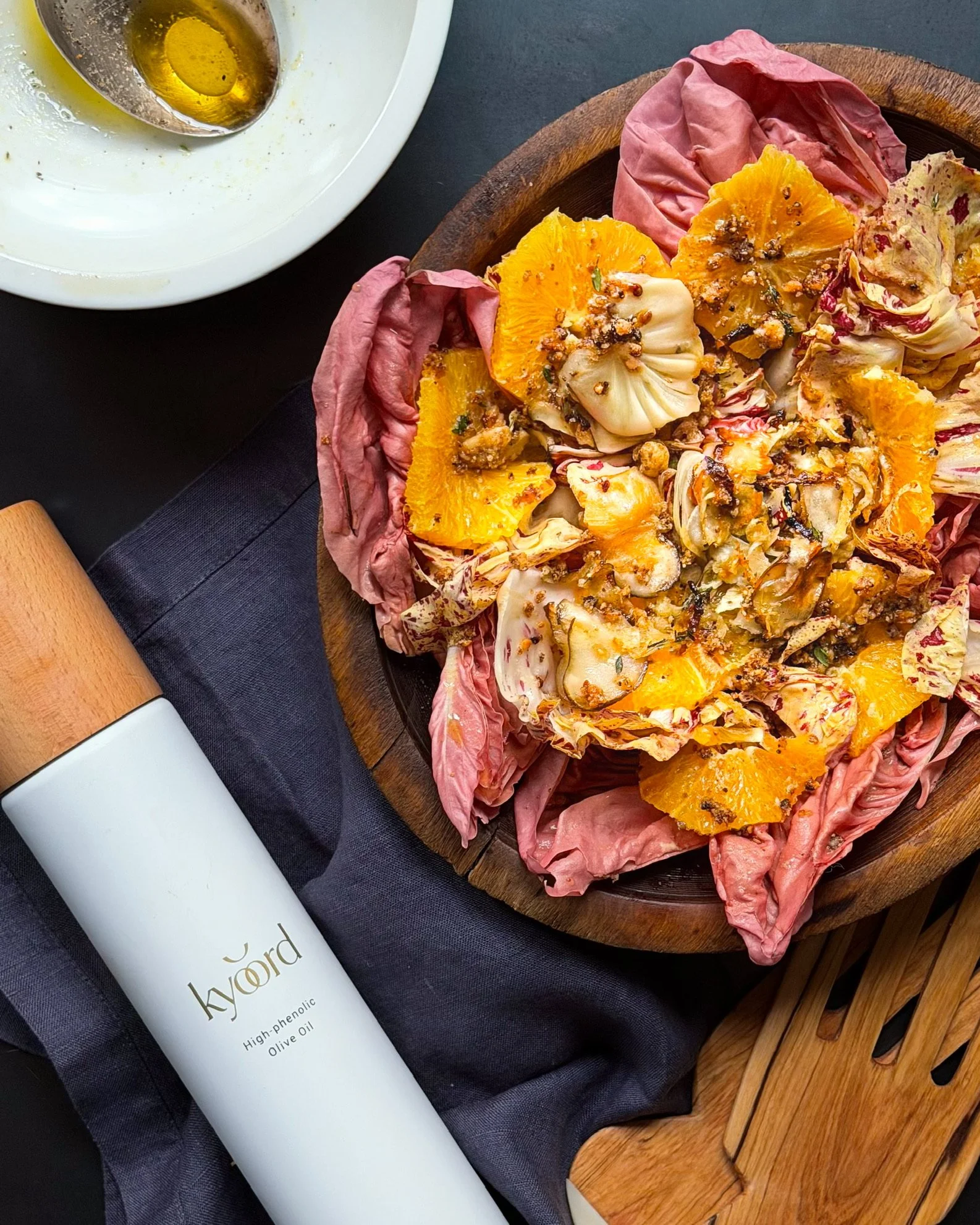
Roasted sunchokes and fennel are paired with bitter winter radicchio, citrus, and a crisp spiced nut pangrattato for a warm, substantial salad.
INGREDIENTS
For the roasted vegetables
1 pound sunchokes (Jerusalem artichokes), scrubbed and halved or cut into roughly 1-inch pieces
1 large fennel bulb, trimmed and cut into wedges
2 tablespoons extra virgin olive oil
1 teaspoon ground cumin
2 to 3 thyme sprigs
½ teaspoon kosher salt
¼ teaspoon freshly ground black pepper
For the nut pangrattato
⅓ cup hazelnuts or walnuts, roughly chopped
2 tablespoons pistachios, roughly chopped
1 tablespoon extra virgin olive oil
½ teaspoon smoked paprika
½ teaspoon garlic powder
¼ teaspoon ground cumin
Pinch of cinnamon, optional
Salt, to taste
For the salad
4 to 5 cups torn radicchio or a mix of bitter winter greens, such as Castelfranco or rosa di Gorizia
2 oranges, segmented, with any juices reserved for the dressing
¼ cup pomegranate seeds, optional
1 to 2 teaspoons thyme leaves or 1 tablespoon chopped chives
For the shallot citrus dressing
3 tablespoons extra virgin olive oil
2 teaspoons minced shallot
1½ tablespoons lemon and orange juice combined, including any juice from segmenting the oranges
1 teaspoon honey or date syrup
1 teaspoon Dijon mustard, optional
Leaves from 2 thyme sprigs
Kosher salt and black pepper, to taste
DIRECTIONS
Roast the vegetables. Heat the oven to 425°F. Spread the sunchokes and fennel on a large sheet pan. Toss with the 2 tablespoons olive oil, cumin, thyme sprigs, salt, and pepper. Give the vegetables room and roast for 25 to 30 minutes, turning once, until the sunchokes are tender and the edges of both vegetables are browned. Remove the thyme stems.
Make the nut pangrattato. While the vegetables roast, toast the hazelnuts and pistachios in a dry skillet over medium heat for 3 to 5 minutes, stirring often. Add the tablespoon of olive oil, paprika, garlic powder, cumin, optional cinnamon, and salt. Stir for 30 to 60 seconds, just until fragrant. Tip onto a plate to cool and crisp. Chop or pulse briefly for a finer crumb, if you like.
Whisk the dressing. Combine the olive oil, shallot, citrus juice, honey, Dijon if using, and thyme leaves. Season with salt and pepper. Taste: the dressing should be bright enough to meet the sweet roasted vegetables.
Assemble. Arrange the radicchio and orange segments on a platter. Add the warm sunchokes and fennel, pomegranate seeds if using, and herbs. Spoon over the dressing and scatter the nut pangrattato just before serving to keep it crisp.
HOW IT TASTES
Bitter and fresh at first, then sweet from the roasted fennel and citrus, with earthy sunchokes and a salty, fragrant crunch at the end.
TECHNIQUES LEARNED
Roast the roots and fennel in a roomy pan until the edges brown. Then bring the warm vegetables and cool leaves together at the last minute. The contrast makes a winter salad feel substantial without losing its snap.
USEFUL COMBINATIONS
Serve alongside roast chicken or fish. Add white beans or lentils to make a more filling lunch. Keep the nut pangrattato separate from leftover salad and sprinkle it on after reheating the vegetables; it also works on soup or roasted carrots.
NUTRITIONAL THERAPY NOTE
Sunchokes contain inulin, a fermentable prebiotic fiber. If they are new to you, start with a modest portion: the same fiber that feeds gut bacteria can cause gas or bloating for some people. Radicchio, fennel, citrus, nuts, and olive oil bring a range of flavors and plant foods to the plate. There is no cleanse to complete here; the useful practice is learning to cook vegetables you will want to eat again.
