
Pan-Roasted Chicken with Miso Brown Butter & Roasted Carrots
Pan Sauces for the Win
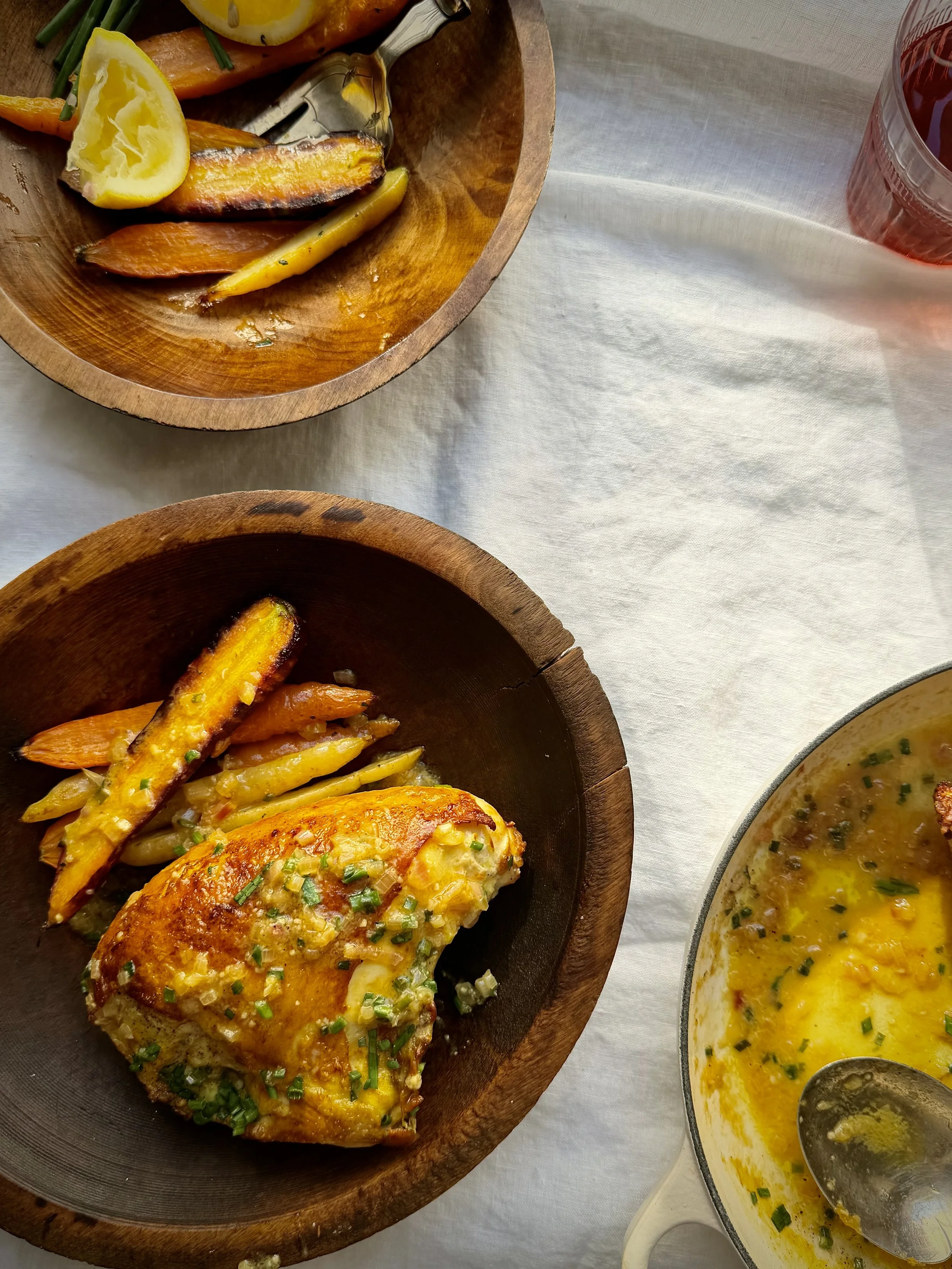
Golden chicken breast and sweet roasted carrots, finished with a shallot pan sauce of white wine, miso, brown butter, and chives, and a scattering of fresh microgreens. Lemon keeps the buttery sauce bright.
I Used to look at the browned bits left in my pan and see more washing up. Now I see the beginning of dinner's best part. A little wine loosens them, stock gives the sauce somewhere to go, and butter brings it together. Pan sauces saved me from so many dinner ruts. Because I love a home-cooked meal. I really do. But after a long day, I’m… lazy. I don’t want three pots going. I don’t want a sink full of dishes. I want one pan. One situation.
So now I sear my chicken, or whatever I’m cooking, let it get deeply golden, take it out, and instead of washing the pan, I add shallots. A splash of wine. Maybe some stock. In this recipe, use miso; it adds a savory depth without taking over. Roasted carrots bring sweetness and browned edges, while a handful of microgreens adds a fresh finish. The lemon keeps the butter and carrots in balance. Once you get comfortable making a pan sauce, the same chicken dinner starts to feel full of possibilities.
Yield, Prep Time, Cook Time, and Total Time
Serves: 2
Prep: 15 minutes
Cook: 40–50 minutes
Total: 55–65 minutes, including resting while you make the sauce
Ingredients
For the chicken and carrots
- 2 bone-in, skin-on chicken breast halves (chicken supreme), about 10–12 ounces each
- 3/4 teaspoon fine sea salt, divided, plus more to taste
- Freshly ground black pepper
- 1 tablespoon plus 2 teaspoons olive oil, divided
- 1 pound carrots, scrubbed or peeled, halved lengthwise; quarter thicker carrots so the pieces are about 1/2 inch thick
- 1 small handful microgreens, gently washed and dried, to finish
For the pan sauce
- 2 tablespoons unsalted butter
- 1 small shallot, finely chopped
- 1/3 cup dry white wine
- 1/2 cup low-sodium chicken stock, plus more if needed
- 1/2 teaspoon white miso, plus another 1/2 teaspoon if needed
- 1–2 teaspoons fresh lemon juice, to taste
- 1 tablespoon finely chopped chives
Method
1. Prepare the oven and chicken. Heat the oven to 400°F. Pat the chicken dry. Season all over with 1/2 teaspoon of the salt and black pepper.
2. Roast the carrots. Toss the carrots with 1 tablespoon of the oil, the remaining 1/4 teaspoon of salt, and a little pepper. Spread on a baking sheet in a single layer, cut side down. Roast for 30–40 minutes, turning once, until browned at the edges and tender through the center. Set aside when ready.
3. Sear the chicken. Heat the remaining 2 teaspoons of oil in an ovenproof skillet over medium heat. Add the chicken skin-side down and cook for 6–8 minutes, adjusting the heat as needed, until the skin is golden and releases from the pan. Turn and cook the flesh side for 1 minute.
4. Finish in the oven. Transfer the skillet to the oven, skin-side up. Roast for approximately 20–35 minutes, depending on thickness, until a thermometer inserted into the thickest part, away from the bone, reads 165°F. Begin checking at 20 minutes. Transfer the chicken to a plate and rest for 5–10 minutes while you make the sauce. Remember that the skillet handle will stay hot.
5. Brown the butter. While the chicken roasts, melt the butter in a small saucepan over medium-low heat. Swirl as it foams. When the milk solids turn golden brown and smell nutty, immediately pour the butter and golden solids into a heatproof bowl. Set aside. If the solids turn black, start again; burnt butter will make the sauce bitter.
6. Build the sauce. Pour off excess chicken fat from the skillet, leaving about 1 teaspoon and the browned bits. If any patches are black and burnt, remove them before making the sauce. Set the skillet over medium-low heat, add the shallot and soften for 2–3 minutes. Add the wine and scrape up the browned bits with a wooden spoon. Simmer until only a few tablespoons remain. Add the stock and any juices from the resting chicken; simmer for 3–5 minutes, until slightly reduced.
7. Finish gently. Mix 1/2 teaspoon miso with a spoonful of the warm pan liquid until smooth, then stir it back into the sauce. Remove the skillet from the heat. When the bubbling subsides, whisk in the brown butter a little at a time. Add 1 teaspoon lemon juice and the chives. Taste before adding more miso, lemon or salt. If the sauce is too concentrated, loosen it with a splash of stock.
8. Serve. Divide the chicken and carrots between two plates. Spoon the sauce around the chicken and over the carrots, leaving most of the crisp skin uncovered. Scatter the microgreens over the plated dish just before serving so they stay fresh. Add potatoes, rice or bread if you would like something to catch the sauce.
Cook by Feel
Watch the pan, not just the clock. The chicken should sizzle steadily. Reduce the heat if the browned bits darken faster than the skin.
A pan sauce should lightly coat a spoon and still flow. Stop reducing before it becomes sticky or intensely salty.
Taste for balance: miso brings salt and savory depth, butter adds richness, and lemon lifts the finish. Add a little of the missing element, then taste again.
Carrots should be tender through the thickest part, with browned edges. Give them room on the tray so they roast evenly.
The skin gives you a browning cue; a thermometer tells you when the chicken is cooked.
Nourishment Note
Chicken provides protein, and carrots add fiber and beta-carotene, which the body can convert to vitamin A. Microgreens add a fresh finishing touch. Miso is used here as a seasoning; a small amount does not make this a probiotic dish. Serve with another vegetable and potatoes, grains or beans according to appetite. Low-sodium stock leaves you more room to season the sauce thoughtfully.
Make It Yours
For a simpler finish, skip browning the butter. Cut the 2 tablespoons cold butter into small cubes and whisk them into the sauce off the heat.
Swap the carrots for fennel or parsnips. Cut into similarly sized pieces and roast until browned and tender; cooking time will vary.
Without wine, use 1/3 cup additional low-sodium stock in its place. Reduce, then continue with the remaining stock; adjust the final lemon juice to taste.
Parsley can replace the chives.
Happy Cooking, MP xo